Did you know that New Jersey homeowners now face a 15% increase in annual precipitation compared to just a decade ago? This shift in climate means that a professional roof installation isn't just a home improvement project; it's a critical engineering defense against intensifying Nor'easters and 90% summer humidity. You likely already feel the pressure of rising labor costs and the nagging worry that a "storm chaser" contractor might disappear after the first deposit. It's a valid concern in a state where the median cost of high-end materials has risen by 12% since 2024.
We've designed this 2026 guide to act as your strategic partner, helping you master the technical, financial, and regulatory complexities of the latest NJ building codes. You'll learn how to select systems that withstand 110 mph winds and discover how modern thermal management can slash your energy bills by up to 22%. We're providing a clear roadmap to a leak-free home and a significant increase in property value. This is about moving beyond basic repairs toward a future-proof architectural solution for your most important investment.
Key Takeaways
- Understand how New Jersey’s unique climate-from high-humidity summers to high-wind Nor’easters-accelerates material degradation and impacts long-term structural integrity.
- Master the technical phases of a professional roof installation, including why a complete "tear-off" is a non-negotiable requirement for legal compliance and durability.
- Identify the core financial drivers of a NJ roofing project, from regional market averages per square to how architectural complexity influences labor fees.
- Navigate the regulatory landscape by identifying the specific municipal permits and HIC registrations required to ensure your project is legally protected.
- Discover the "Architectural Approach" to home protection that harmonizes roofing systems with attic remediation for superior energy efficiency and ROI.
Understanding Roof Installation in New Jersey’s Unique Climate
New Jersey homeowners face a volatile environment that demands more than just a standard shingle layout. The state's climate is characterized by 40 degree temperature swings within single 24 hour periods, creating a cycle of thermal expansion and contraction that punishes inferior materials. This constant movement causes standard asphalt binders to become brittle, leading to premature granule loss and structural fatigue. A high quality roof installation must account for these specific stressors to ensure the structure survives its projected 25 year lifespan.
The geography of the Garden State introduces two distinct threats: stagnant inland humidity and coastal wind events. In North and Central Jersey, high humidity levels during July and August trap moisture against the roof deck, fostering gloeocapsa magma, a hardy algae that eats away at limestone fillers in shingles. Conversely, Nor'easters bring sustained 60 mph winds with gusts exceeding 85 mph. Without proper shingle adhesion and high performance starter strips, these wind events lift shingles, breaking the water tight seal and exposing the underlayment to driving rain. Understanding the Anatomy of a Professional Roof Installation is vital because it reveals how every component, from the drip edge to the ridge vent, works as a unified system to resist these local pressures.
Ice damming remains a critical threat for homes in counties like Morris, Bergen, and Somerset. This phenomenon occurs when heat escapes from the living space into the attic, melting the bottom layer of snow on the roof. As this water runs down to the colder eaves, it refreezes, creating a literal dam of ice. This backup forces water under the shingles and into the wall cavities. A strategic roof installation incorporates ice and water shields at least six feet up from the eave line to mitigate this risk. Ultimately, the roof serves as the primary barrier in your home's thermal envelope, preventing energy loss and protecting the structural integrity of the entire building.
Weather Challenges from Chatham to the Jersey Shore
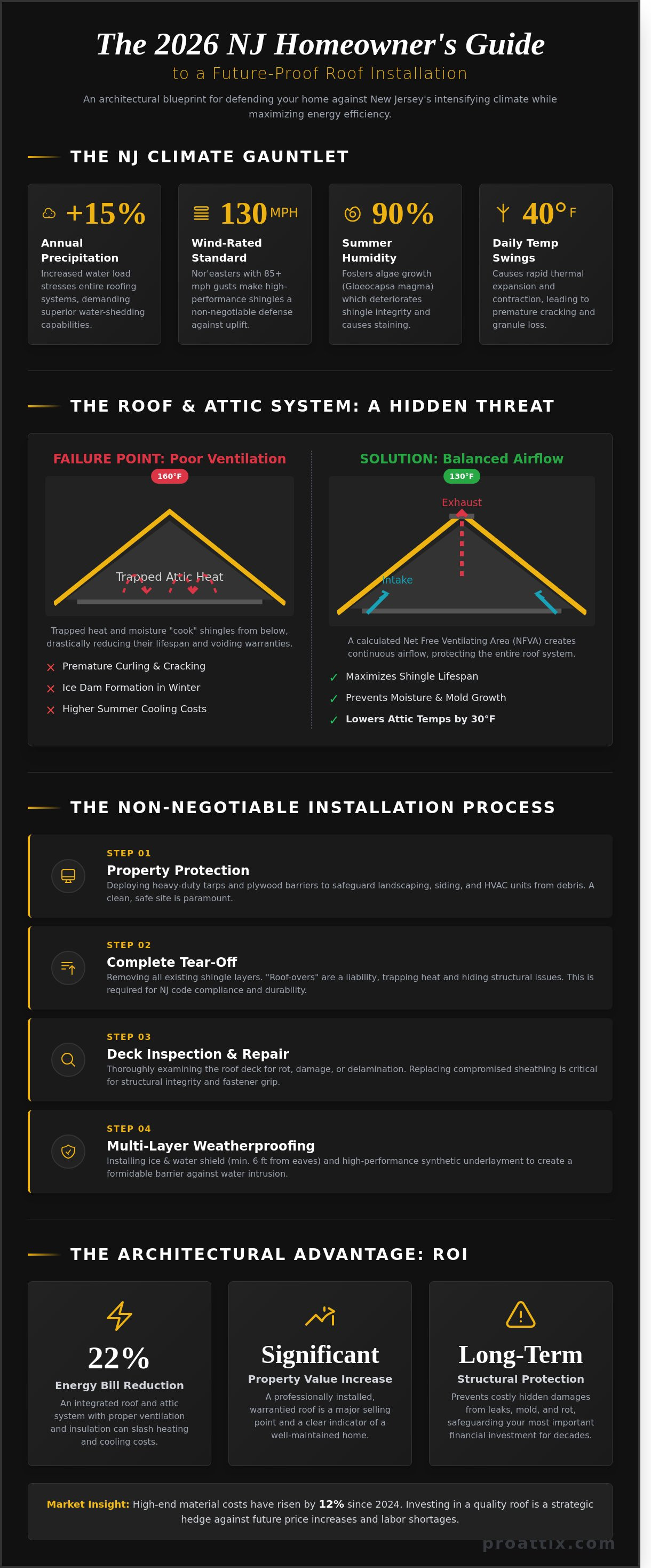
Coastal properties in towns like Belmar or Long Beach Island face salt air corrosion that can degrade standard galvanized flashing in under 10 years. We recommend stainless steel or heavy gauge aluminum for these zones. For 2026, updated weather patterns suggest a 12% increase in high wind frequency, making 130 mph wind-rated shingles a non-negotiable standard for New Jersey homes. Additionally, roof color impacts your wallet. In the intense NJ sun, a dark roof can reach 160 degrees, while a "cool roof" with a high Solar Reflectance Index (SRI) can lower attic temperatures by 30 degrees, reducing summer cooling costs by nearly 15%.
The Roof-Attic Connection
Many homeowners don't realize that a roof often fails from the inside out. Poor attic ventilation creates a "heat trap" that effectively cooks the shingles, causing them to curl and crack years before they should. A professional roof installation is never complete without a comprehensive insulation audit to ensure the balance of intake and exhaust air is precise. If your current shingles are "blistering" or if you see dark stains on your plywood sheathing, your roof likely failed because it couldn't breathe. We solve this by calculating the exact Net Free Ventilating Area (NFVA) required for your specific square footage, ensuring your new investment isn't compromised by trapped thermal energy.
The Anatomy of a Professional Roof Installation Process
A successful roof installation functions like a high-performance engine; every component must synchronize to withstand New Jersey's volatile climate. We view the process as a structural upgrade rather than a simple cosmetic fix. Before the first shingle moves, property protection is the priority. This involves installing heavy-duty tarps and plywood barriers to safeguard NJ landscapes, delicate siding, and expensive HVAC units from falling debris. A clean site isn't just about aesthetics; it's about preventing property damage during the high-impact phases of the project.
The transition to the tear-off phase reveals the true health of a home. While some contractors might suggest "roof-overs," NJ building codes for roofing often limit residential structures to two layers of shingles. However, leaving an old layer is a massive liability. Double layers trap heat, which accelerates shingle degradation, and they add thousands of pounds of unnecessary stress to the rafters. Stripping the roof to the bare wood is the only way to perform a comprehensive decking inspection. We look for structural rot, "soft spots," or delaminated plywood that would otherwise compromise the 130mph wind resistance of the new system.
Once the deck is verified as sound, the invisible heroes of the roof go to work. This includes synthetic underlayment, which provides a secondary water barrier, and specialized flashing. Flashing redirects water away from vertical surfaces like chimneys and dormers. Without these precision-engineered layers, even the most expensive shingles will fail during a heavy Northeast rainstorm.
Step-by-Step Execution
Precision execution begins with stripping materials to the bare wood. This allows us to replace damaged 1/2-inch CDX plywood before applying any new layers. We prioritize installing self-adhering ice and water shields in critical NJ leak zones, specifically valleys and around chimneys, where ice dams frequently form during January freezes. For the final layer, we utilize a strict 6-nail pattern for every asphalt shingle. This specific fastening technique is what provides the necessary grip to survive 130mph wind gusts during coastal storms. Proper ridge vent installation follows, ensuring a continuous flow of air that prevents attic heat from baking the shingles from the inside out.
Material Selection for NJ Homes
Choosing the right material depends on your home's architecture and long-term goals. While asphalt shingle remains the standard for its cost-to-durability ratio, many homeowners now opt for metal roofing for its 50-year lifespan and superior snow-shedding capabilities. For low-slope NJ additions or "flat" garage roofs, we recommend rubber roofing (EPDM) to prevent the ponding water issues common with traditional shingles on slight inclines. Given the 85% humidity levels during NJ summers, using algae-resistant materials with copper-infused granules is a non-negotiable requirement to prevent those unsightly black streaks from forming over time.
Executing these steps with engineering-level precision ensures your home remains a dry, efficient sanctuary. If you're concerned about the age of your current system, scheduling a professional assessment can help identify hidden vulnerabilities before they become costly leaks.
Calculating Roof Installation Costs and ROI in New Jersey
Beyond the initial estimate, two variables often impact the budget. First, municipal permit fees in towns like Montclair or Ridgewood can range from $250 to over $700 based on the project's total value. Second, plywood replacement is a common necessity that contractors can't always predict. If the existing decking shows rot or delamination after the tear-off, expect to pay approximately $95 per 4x8 sheet. This isn't an optional expense; it's a structural requirement to ensure the new shingles bond correctly.
NJ Labor and Material Drivers
NJ labor rates remain 15% to 20% higher than the national average. This is a direct result of the state's rigorous insurance requirements and the high cost of doing business in the Tri-State area. Looking toward 2026, supply chain data suggests asphalt shingle prices will rise by approximately 6% annually due to fluctuating crude oil costs. Disposal fees also play a major role in the final invoice. Hauling away old debris costs roughly $110 per ton at local transfer stations. For a standard 2,500 square foot home, this adds $700 to $1,300 to the project cost.
Energy Efficiency and Savings
A modern roof installation is a strategic financial asset. Transitioning to a cool-roof system can reduce summer cooling loads by 15% in Central Jersey's humid climate. You achieve the highest system payback by integrating a complete water management strategy. This is most effective when coordinating your new roof with high-capacity gutters. This combination prevents foundation erosion and basement flooding, which are costly repairs that immediately lower property value.
- Federal Tax Credits: Under the 25C tax credit, NJ homeowners may qualify for up to $1,200 in annual credits for specific energy-efficient upgrades.
- Appraisal Boost: A new roof provides an average of 62% to 68% return on investment at the time of sale according to regional appraisal data.
- Insurance Discounts: NJ carriers often offer 5% to 12% discounts on premiums for homes with new, impact-resistant roofing systems.
Investing in a high-quality roof isn't just about stopping leaks. It's about building a future-proof structure that stabilizes your home's microclimate. By choosing a customized solution tailored to NJ weather patterns, you transform a maintenance headache into a long-term partnership with your property's value. The upfront cost is high, but the measurable results in energy savings and asset protection provide a clear path to profitability over the system's 30-year lifespan.
Navigating NJ Building Codes and Contractor Selection
A successful roof installation isn't just about shingles and nails; it's about legal and structural compliance. In New Jersey, the permit process serves as a critical quality control gate. Every municipality, from Chatham to Princeton, requires a building permit for a full replacement under the NJ Uniform Construction Code (UCC). Skipping this step creates a "cloud" on your property title that often halts home sales. You'll face fines reaching $2,000 per violation if you proceed without municipal approval. These permits ensure that a third-party official validates the work, protecting your investment from substandard craftsmanship.
NJ Regulatory Compliance
Towns like Chatham enforce rigorous inspection schedules. An inspector must verify the roof deck's integrity after the old shingles are removed and then return for a final check. By 2026, updated energy codes will mandate stricter attic ventilation ratios. Specifically, you'll need 1 square foot of net free vent area for every 150 square feet of attic floor space. This 1:150 ratio prevents heat traps that void shingle warranties and spike cooling costs by 15% during humid NJ summers.
New Jersey law requires every residential roofer to hold a Home Improvement Contractor (HIC) registration through the Division of Consumer Affairs. This isn't a "nice to have" credential. It's a mandatory legal requirement. You can verify a contractor's status in 30 seconds on the NJ Consumer Affairs website. If they aren't registered, they're operating illegally. This registration ensures the contractor maintains a legitimate business presence and adheres to state consumer protection standards, including the use of written contracts for any project over $500.
"Tailgate" contractors often offer prices 30% below the market average because they cut corners on insurance. If an uninsured worker falls on your property, your homeowners' insurance might not cover the medical costs, leaving you personally liable for six-figure settlements. A professional roof installation team carries at least $1 million in general liability insurance and full workers' compensation. Always demand a current COI (Certificate of Insurance) sent directly from their provider to your email before work begins. This document is your only real protection against litigation.
Red Flags in Local Roofing
Storm chasers are a recurring problem after NJ blizzards or Nor'easters. These crews use out-of-state plates and temporary yard signs, disappearing as soon as the final check clears. A legitimate NJ business must provide a physical office address, not just a P.O. Box. If a bid is significantly lower than three other local quotes, it's a mathematical certainty that they're using sub-standard materials or skipping the permit process entirely.
- What is your NJ HIC registration number and can I verify it now?
- Will you provide the municipal permit and schedule the required UCC inspections?
- Do you have a physical office located within 50 miles of this project?
- Can you provide three references from NJ projects completed in the last 12 months?
- Is the 1:150 ventilation ratio included in your technical scope of work?
Protect your home with a system built on engineering precision and total regulatory transparency. Schedule your professional roof assessment to ensure your project meets the highest NJ standards.
The ProAttix Advantage: Integrated Roofing and Attic Solutions
Many New Jersey contractors engage in "shingle slapping," a practice where teams rush to tear off old materials and nail down new ones without considering the home's structural health. ProAttix rejects this superficial approach. We function as architectural partners who view your home as a single, integrated system. A roof installation isn't a standalone event; it's a critical component of your building's envelope that must work in tandem with the space beneath it. When we design a solution, we're looking at the physics of your home, not just the aesthetics of the shingles.
Our methodology focuses on harmonizing roofing with attic remediation. Research shows that 40% of premature roof failures in the Tri-State area stem from poor attic ventilation and heat entrapment. If your attic reaches 150 degrees in July, it effectively bakes your shingles from the inside out, voiding many manufacturer warranties. We solve this by balancing intake and exhaust airflow during every project. This systems-based thinking extends the life of your investment and reduces your annual cooling costs by an average of 15%.
We've also mastered the "Clean Site" promise to protect your NJ property. Construction is inherently messy, but your home shouldn't look like a disaster zone. We utilize specialized debris management equipment that catches old shingles before they ever touch your rosebushes or lawn. Our crews perform a triple-pass magnetic sweep to ensure 100% of stray nails are recovered. We treat your driveway and landscaping with the same precision we apply to the peak of your roof.
Warranty transparency is where ProAttix truly separates itself from the competition. We've seen too many homeowners get burned by "tailgate warranties" that disappear when a contractor changes their phone number. We provide a clear, written distinction between the 50-year non-prorated manufacturer warranty on materials and our own 10-year workmanship guarantee. You'll know exactly what's covered, from wind damage to installation errors, before we sign a single contract.
Our Precision Process
Precision begins with data. Before the first nail is pulled, our team conducts a 25-point diagnostic of your entire roofing system. We don't just check for leaks; we analyze the R-value of your insulation and the structural integrity of your gutters to ensure total home protection. ProAttix utilizes high-grade synthetic underlayment on every NJ project to provide 2x the moisture protection of standard felt. This high-performance barrier ensures that even if a shingle is displaced during a storm, your decking remains dry and rot-free.
Your Next Steps to a Protected Home
Taking the next step toward a secure home is straightforward and data-driven. When you schedule a professional NJ roof and attic assessment, you aren't just getting a price quote. You're getting a comprehensive health report of your home's exterior. During your ProAttix consultation, we use digital 3D modeling to show you exactly how different materials will look on your specific house. We provide a fixed-price proposal that eliminates the "hidden fees" common in the industry. It's time to move beyond temporary fixes and invest in a permanent solution. Protect your New Jersey home with a ProAttix roof installation today.
Secure Your Home’s Future with Integrated Engineering
A high-quality roof installation delivers more than curb appeal; it provides a measurable 61% return on investment while shielding your property from New Jersey’s 50+ inches of annual precipitation. Success in 2026 requires a shift from basic shingle replacement to a holistic system that accounts for attic ventilation and thermal dynamics. By prioritizing these integrated health factors, you can extend your system’s lifespan by up to 10 years.
As a local Chatham, NJ specialist, ProAttix combines NJ HIC Registered credentials with a deep understanding of regional building codes. We've optimized our process to ensure your home remains fully insured and compliant with the latest 2026 safety standards. Our focus on the intersection of attic health and structural durability means you won't have to worry about premature failures or hidden moisture damage. We're here to serve as your strategic partner in maintaining a high-performing home so you don't have to manage complex repairs later.
Get Your Free New Jersey Roof Installation Estimate
Your home deserves a shield that's built to last for decades.
Frequently Asked Questions
How much does a new roof installation cost in New Jersey in 2026?
Expect to pay between $12,500 and $28,000 for a standard 2,000-square-foot home in New Jersey by 2026. These figures reflect a 4% annual inflation adjustment from 2024 market rates. Your final investment depends on material choice; premium slate-effect shingles often reach the higher end of this range while architectural shingles stay more affordable.
How long does the average roof installation take for a NJ home?
A professional roof installation for a typical New Jersey residence takes 1 to 2 days of active labor. Larger projects exceeding 3,500 square feet or those with complex architectural valleys might extend to a 3-day timeline. We focus on a streamlined execution to minimize disruption to your daily routine while maintaining strict safety protocols on-site.
Do I need a permit for a roof replacement in New Jersey?
Yes, the New Jersey Uniform Construction Code requires a building permit for every full roof replacement performed in the state. Homeowners must submit applications to their local municipal construction office before any shingles are removed. Failure to secure this documentation can result in municipal fines starting at $500 and creates significant hurdles during future property sales.
Can I install a new roof over my existing shingles in NJ?
New Jersey building codes allow a maximum of two shingle layers, but we recommend a full tear-off for 100% of our projects. Installing new materials over old ones traps excessive heat and prevents us from inspecting the underlying plywood deck for rot. A clean deck ensures the structural integrity of your new roof installation and validates the manufacturer's long-term warranty.
What is the best time of year to install a roof in New Jersey?
Late September through early November offers the most stable climate for roofing projects in the Northeast. During these 10 weeks, temperatures typically hover between 45 and 70 degrees Fahrenheit. This specific range allows asphalt shingles to seal properly without the thermal cracking risks associated with July's 95-degree heat or January's freezing cycles.
How do I know if I need a full roof installation or just a repair?
If more than 25% of your roof surface shows signs of failure like curling shingles or bald granule spots, a full replacement is the only logical choice. Minor leaks localized to a single chimney flashing or vent pipe usually only require a targeted repair. We use a 12-point diagnostic checklist to determine if the system's core architecture remains viable for another season.
Does a new roof installation include new gutters and attic insulation?
A standard replacement quote focuses on the deck, underlayment, and shingles, so gutters and insulation are typically treated as separate upgrades. Adding seamless 6-inch gutters usually increases the project total by $1,200 to $2,800 depending on the linear footage. Upgrading attic insulation to R-49 standards is a strategic move that can reduce your annual cooling costs by 15% immediately.
What kind of warranty should I expect for a professional NJ roof install?
You should demand a 50-year non-prorated material warranty and a 10-year workmanship guarantee from your contractor. These terms ensure that 100% of replacement costs are covered if factory defects appear within the first few decades. Our partnership approach focuses on long-term reliability, providing you with a digital record of all installation milestones to support any future warranty claims.